Observe local heat
Road surface, weather and traffic data help put a local intervention into context.
Lesson: Document measurement conditions. Three days do not yet demonstrate lasting cooling.
Example and sources → For municipalities
Smart Village applications are possible even in small villages. Martinfeld offers practical examples in energy, the environment and traffic – with public measurements, experience and open questions.
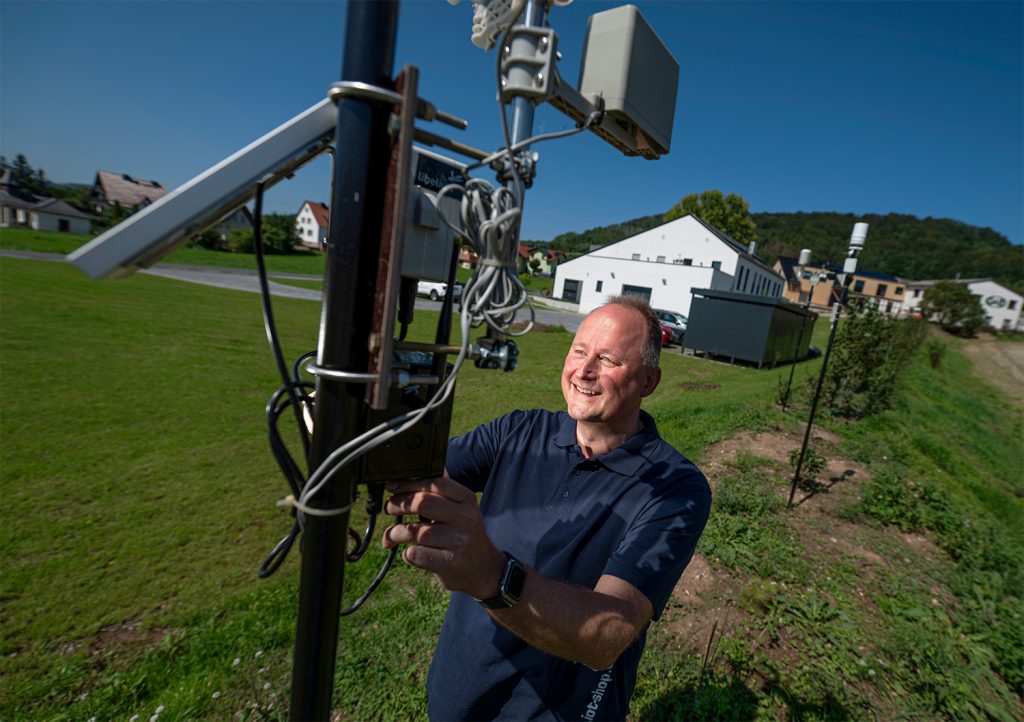
Road surface, weather and traffic data help put a local intervention into context.
Lesson: Document measurement conditions. Three days do not yet demonstrate lasting cooling.
Example and sources →Photovoltaics on the fire station since December 2024; the sports clubhouse and mayor's office followed in 2025.
Lesson: Clearly distinguish generation, consumption and the local net grid balance.
Example and sources →Cameras and radar record traffic. Public time series make observations accessible.
Lesson: Take the measurement site, period and recorded traffic types into account in every analysis.
Example and sources →The benefit determines the sensors, network and platform.
A limited trial makes impact and effort visible.
Maintenance, data upkeep and responsibilities belong in the plan.
These steps provide a working framework. Depending on the project, they may overlap or be repeated.
Start with a specific problem and involve those affected early.
Clearly assign responsibilities across administration, operations and technology.
Record existing networks, sites, power supplies and data access.
Test a manageable use case within a defined timeframe.
Combine technical data with effort, costs and practical benefits.
Establish lasting arrangements for maintenance, privacy, responsibilities and funding.
Expand to other sites or tasks only after evaluating the results.
Objectives, budget, procurement, privacy and political decisions.
Municipal works, building management or utilities with day-to-day experience.
Network planning, devices, platform, interfaces and documentation.
Users, clubs and initiatives who understand needs and acceptance.
How can existing sensors help monitor a local intervention? The Flinsberger Straße case combines road surface, weather and traffic data.
Three hot days in Martinfeld →Starting point: The switch to LEDs and networked control was an early part of SMARTinfeld. Feedback from the trial installation and adjusted switching times form part of the project description.
Task for other municipalities: Before a pilot, clarify who maintains switching times, handles faults and receives local feedback. Record energy demand and maintenance effort before and after the change under comparable conditions.
Limitation: The new website does not yet show live consumption or verified savings for this project. The model calculation does not replace that evidence.
Project description and model calculation →Starting point: An ultrasonic sensor on the Rosoppe and soil moisture measurements at two trees provide different local observations.
Task for other municipalities: Document the measurement location, reference point and installation depth. A responsible person identifies who checks data gaps and arranges an on-site observation when readings are unusual.
Limitation: Measurements from different depths are not directly comparable. A local water-level reading does not replace an official flood warning.
Measurement sites and context →Confirmed investment costs, operating hours and quantitative before-and-after results are not yet available here for these examples. They are therefore not estimated.
Overview of Smart Village applications in Martinfeld →
Use this checklist to prepare for your project discussion. Ticks apply only to the open page and are not saved.
Beyond devices, costs include planning, installation, connectivity, platforms, maintenance, replacement and staff time for analysis and communication. Grants can make it easier to get started; long-term operation needs its own funding basis.
Times are local to Martinfeld (Europe/Berlin). Local notices and linked original documents may be in German.